Brian & Jenni's Relatives Are framed throughout the LLC
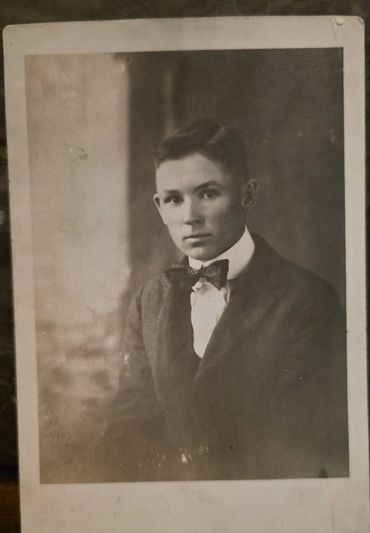
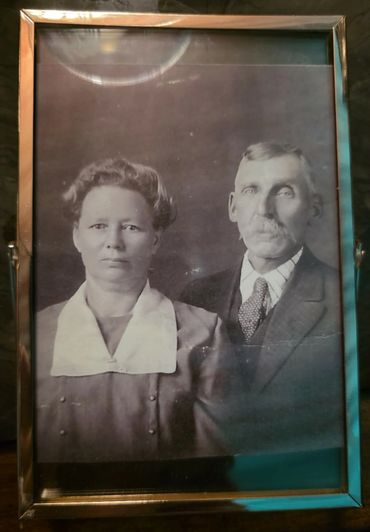
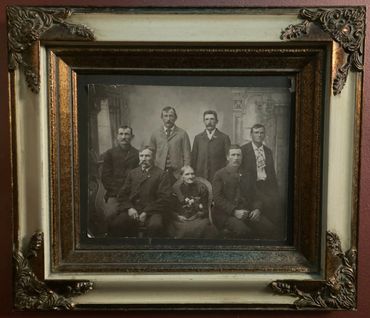
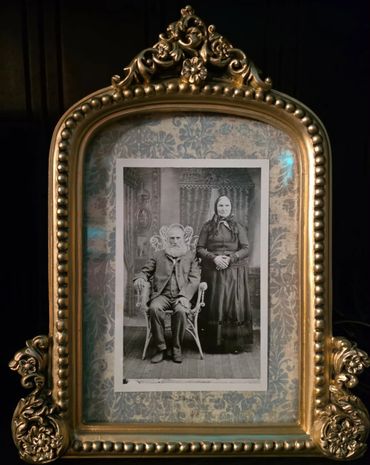
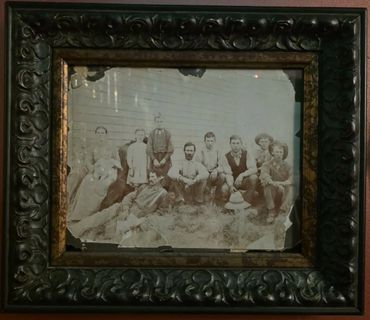
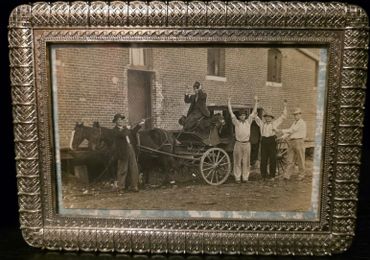
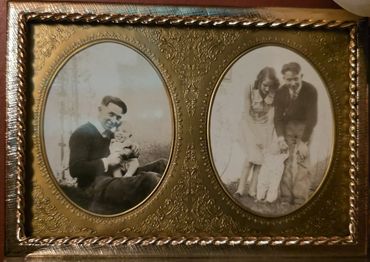
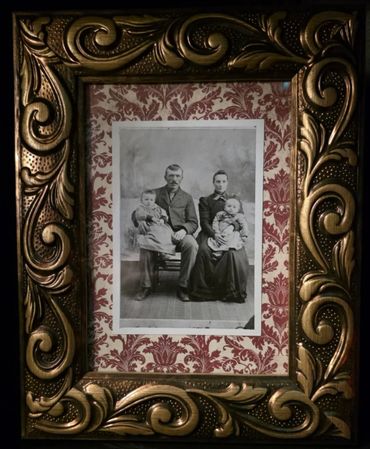
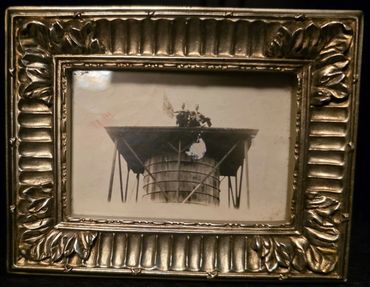
In The Frames & On the shelves of the llc

The State Café Knew Their "Grapes"
This 1927 invoice from the Ryan Fruit Company shows an order of 884 pounds of grapes Zinfandel and Muscat, signed for by one “Pete J. Buller.” Harmless enough, unless you know your history. In Prohibition-era Butte, Montana, where alcohol was illegal but hardly inaccessible, such a shipment was likely destined for something more intoxicating than a fruit bowl. These were wine grapes, ordered in bulk, and by all accounts, never meant to be eaten.
Butte was a city of tunnels, steam heat, and secrets. Beneath the very buildings that housed cafés, hotels, and barbershops ran a network of underground passageways used by the Chinese community in the 19th century, and by bootleggers in the 1920s. The State Café at 16 S. Main Street, just steps from 326 W. Mercury, was said to have had a direct line to the underground. No police. No paperwork. Just a handshake, a nod, and a trapdoor behind the pantry.
And Pete? Pete knew exactly what he was doing. He signed the check with the steady hand of a man who’d done it before, who knew which crates to stack on top and which to keep near the back wall in case of a knock. He wasn’t some patsy with a produce list. He was a grape broker to the thirsty and the clever. The kind of guy who didn’t toast to laws, he toasted to loopholes.

A Spoonful of Spirits: Helped The Prohibition Go Down
From the druggist’s desk to your doctor’s orders during Prohibition, the only legal way to obtain whiskey was through a pharmacy. This original 1920s prescription for medicinal whiskey hails from Marceline, Missouri, a town best known as Walt Disney’s childhood home. But this wasn’t make-believe, it was federally sanctioned bootlegging, signed and stamped in triplicate.
Handwritten in steady ink and folded like any other slip for aspirin, this document prescribed one pint of whiskey every ten days, a dose both curative and convenient. Pharmacies filled over 6 million of these scripts in the first year of Prohibition alone, turning local druggists into unlikely bartenders.
Marceline gave Walt Disney his Main Street.
This slip gave grown-ups a reason to smile again.
Call it medicine. Call it a loophole. Either way, the bottle was real.

Federal Alcohol Purchase Permit
Issued May 22, 1933
This original U.S. Treasury “Permit to Purchase” authorized Dr. Ira Nordhoff, DDS of Muskegon, Michigan, to legally obtain and receive two wine gallons of alcohol during the final year of Prohibition.
Though alcohol had been largely banned since 1920, licensed professionals could purchase it for medical use, but only with strict federal approval and regulated shipment. This document even specifies delivery by rail carrier, reflecting the close federal oversight of interstate alcohol transport.
Just weeks earlier, in April 1933, Congress legalized low-alcohol 3.2% beer; the first crack in Prohibition’s wall. Full repeal would come later that year with the 21st Amendment.
A small form from a massive turning point in American history.

Bootleg Tailor Busted in a Backroom Booze Sting – 1928
An Authentic Prohibition-Era Criminal Transcript
Williamsport, Pennsylvania – November 1928
You’re looking at the real deal: the original court transcript and warrant for one Truman Rotz; tailor by day, barkeep by night, and apparently a little too good at both. On November 10th, 1928, Williamsport’s Chief of Police swore under oath that Rotz’s place at 436 Walnut Street wasn’t just stitching seams, it was stitching together a full-blown bootlegging operation.
The warrant gave officers the green light to raid his “Tailor Shop and Drinking Room,” which also doubled as a restaurant and private residence. When they kicked in the door two days later, they found more than cufflinks and coat racks: bottles labeled for whiskey and gin, cider jugs, mash containers, a warning buzzer rigged to the back door, and enough grain alcohol to start a small revolution.
It wasn’t hearsay, it was a full sting. Signed, sealed, and executed with classic Prohibition flair. Bail was set at $1,000 (that’s over $17K today), co-signed by a fellow named John J. Fox. His name’s still on the dotted line at the bottom, if the tissue paper this was typed on was lifted up (see picture below).
This ain’t a copy. This is the actual paper they slapped on the desk before dragging Rotz downtown. Look at the seal, the signatures, the language. It’s not just a document. It’s proof that even in a dry county, somebody was always pouring.

When lifting up the typed-tissue paper you'll discover this signed "warrant"
.jpg/:/cr=t:24.64%25,l:16.33%25,w:64.94%25,h:64.94%25/rs=w:600,cg:true,m)
A Toast Before the Drought
Republican National Convention - First Day Only – June 7, 1916
This original ticket admitted one guest to the first day of the 1916 Republican National Convention held just four years before Prohibition became the law of the land. At this very gathering, party leaders were walking a political tightrope: trying to please booming industrialists and the rising temperance crowd. Dry counties were spreading like spilled moonshine, and support from groups like the WCTU was becoming a ticket-punching issue.
The Republican nominee, Charles Evans Hughes, lost to Woodrow Wilson, but the real winner was the 18th Amendment, already fermenting behind closed doors. This little pink pass gave you a front-row seat to the slow uncorking of America’s driest decade.
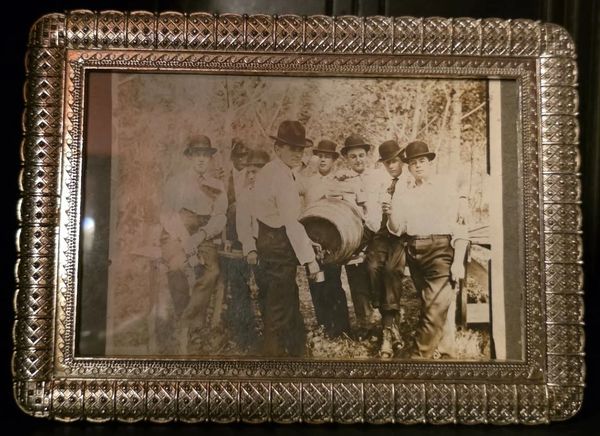
Final Toast to Freedom: One Last Pour Before the Law
They say history doesn’t whisper, it clinks glasses. Captured on the very brink of a national buzzkill, this original photograph likely dates to the final day before Prohibition hit the switch in 1920. The gents, all dressed to defy the Volstead Act in high-collar shirts, suspenders, and brimmed hats, are caught mid-toast with what we can only assume is a farewell keg of something far stronger than lemonade.
Judging by the smirks, raised flasks, and general “catch us if you can” attitude, these were not men preparing to dry out, they were gearing up to go underground. Whether they became bootleggers, barbershop bartenders, or just very thirsty citizens, we salute their spirit.
Displayed here in full defiance, this image reminds us that every great party needs a little danger and that somewhere, someone’s always carrying the barrel.
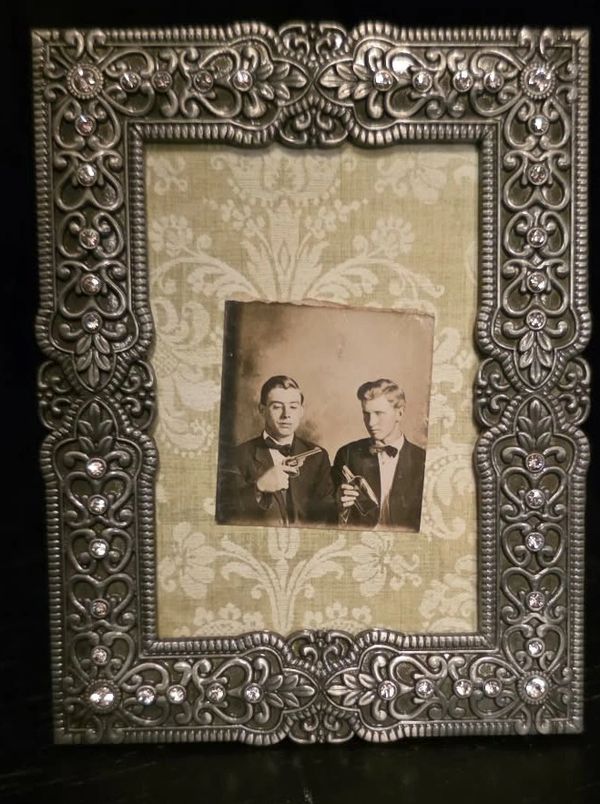
Small Frame, Big Trouble
This one’s got all the makings of a backroom mystery: two sharply dressed gents, one with a smirk and a bottle, the other gripping what looks like an actual pistol. The backdrop says “parlor portrait,” but the posture says “Partners in Crime.” Could they be bootleggers posing for a cheeky snapshot before a drop? Or just a couple of troublemakers hamming it up for the camera after too much bathtub gin? This original photo, barely the size of a postage stamp, captures two friends dressed to the nines and clearly up to no good, with a stare that says, “What law?” Whether snapped in a photobooth or passed hand to hand behind closed doors, this little image hints at a lot more than it shows. In an era when booze was banned and bravado was currency, these two weren’t just posing, they were making a statement. Evelyn would’ve raised a glass… then probably frisked them for the rest of the bottle.

A Hatchet Job of Humor
This devilishly clever flask, shaped like Carrie Nation’s infamous hatchet, turns the Temperance Movement on its head, quite literally. The engraving “Let’s Bury It” was likely aimed squarely at Carrie herself, who gained notoriety in the early 1900s for storming saloons and smashing liquor bottles with her weapon of choice. But while Nation wanted to bury booze, this flask’s owner had other plans.
Dating to the Prohibition era (circa 1920s–1933), this novelty piece was both a wink and a middle finger to the dry crusade sweeping the nation. Crafted from pewter, it was designed for stealth sipping and defiant laughs, especially in the speakeasy shadows where it was passed, admired, and no doubt filled more than once with contraband hooch.
Whether made in jest or rebellion, this flask captures the spirit of the era: resistance with a raised glass. The only thing getting buried here… was sobriety.

The Curious Case of the W.C.T.U. Menu
Somewhere between a church social and a covert operation, the Women’s Christian Temperance Union decided to get cute. What you see here is their “Bill of Fare,” a moral menu served with a wink and a wagging finger. Hidden behind innocent prices and poetic names were dishes designed to delight and distract from the fact that not a drop of alcohol would pass a single sanctified lip.
Take a closer look:
“A Chilly Reception” might’ve been an ice cream scoop that melted faster than their patience for jazz.
“A Link of Friendship”? Likely a sausage served with a side of disapproval if you brought a flask.
“A Piece of the Moon” could’ve been a slice of lemon pie, though Evelyn might say it sounds more like something you’d regret at midnight.
And “The End of Goat”? No doubt the last bite of mutton stew or perhaps a nod to ending sinful behavior, depending how dramatic Sister Edna was feeling.
They told you not to talk to the waiters. Told you not to reveal the “hidden food.”
But you know what Evelyn says: if you're going to give something a name like Splinters of Fun and Hidden Tears, you best be ready to serve it with a little mischief.
So go ahead. Read the room. Read the menu. Imagine the chatter behind the gloves, the secrets under those bonnets, and the one woman scribbling notes for her own speakeasy one day.
Because not every rebellion starts with a drink.
But the good ones usually end with one.

The Weight of a Dream (and a Little Defiance)
This solid brass plumb bob was hand-turned by Alfred Franklin Martin, a carpenter from Petaluma, California and great-grandfather to Brian Martin. Alfred used this exact tool while working on the construction of the Golden Gate Bridge during the early 1930s, when precision tools and even more precise hands shaped America’s future one rivet at a time.
The photo beside it shows the bridge mid-stride: its towers standing tall, but no road between them yet. That gap? This particular bob likely dangled high above the churning waters of the Golden Gate Strait, helping align the massive steel towers and suspension cables that would soon carry millions. It hung over the same roaring waters where bootleggers once ran liquor-laden boats through fog and federal patrols. During Prohibition, the Golden Gate wasn’t just a landmark under construction; it was a silent witness to clever smuggling routes, floating speakeasies, and foggy handoffs under moonlight.
While Alfred was building America’s most famous bridge by day, it’s entirely possible he passed a few familiar faces who were... “constructing solutions” of their own after dark.
This bob didn’t just help straighten steel. It hung steady through a time when the country was anything but.
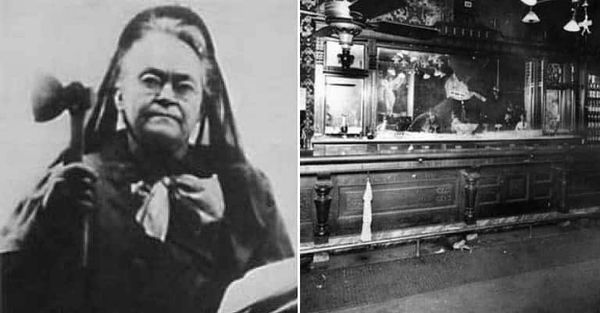
Carrie Nation: Bar Buster Extraordinaire
Don’t let the bonnet fool you. Carrie Nation was a six-foot-tall tornado of righteous rage with a Bible in one hand and a hatchet in the other. A fierce leader of the temperance movement, she took her message directly to the source—smashing saloons across Kansas and beyond. Mirrors, bottles, bar tops? All fair game.
Was she arrested? Frequently. Jailed more than 30 times, Carrie wore her arrests like badges of honor. Judges often demanded she pay restitution for the damage, but she rarely paid out of pocket. Instead, she raised funds selling souvenir hatchets, photos, and pamphlets, sometimes right outside the courthouse. And when that wasn’t enough, her fans happily chipped in.
Carrie saw no crime—only calling. As she once declared to a judge:
“You have put me in jail for smashing saloons, but I smashed them for the love of God.”
THE PEEP THAT KEPT SECRETS
Prohibition-Era Speakeasy Door Viewer, circa 1920s-ish (maybe)
Before passwords were digital, they were whispered. This cast-brass relic once guarded the threshold of an unmarked door hidden behind a wall of bourbon barrels and lies. One knock. A pause. Then a metal on metal quite screech; this ornate little window creaked open just enough to reveal a pair of suspicious eyes, lined in smoke and candlelight.
You didn’t just stroll in. You earned your entry with a name, a phrase, or a face that wouldn’t get the whole joint raided.
Allegedly pried from the ruins of a speakeasy in Chicago (or maybe Galveston, depending who’s telling the story), this viewer may have greeted jazz royalty, mob messengers, or just a lot of thirsty regulars. The truth? Locked behind the same door it once protected.
Knock once for yes. Knock twice or more for trouble.
“Just Add... Patience”
Booth’s Pale Dry Fair Weather Chart (c. 1932)
This charming “Fair Weather Chart” sailed quietly through the last choppy waters of Prohibition—its sails full of mocktail recipes “For Good Fellows (After Repeal).” But let’s not kid ourselves: every spirit listed—gin, rum, whiskey—was promptly labeled “non-alcoholic,” a wink-and-nod formality to keep the feds off Booth’s back.
Booth’s Pale Dry was marketed as a soda, but it was no secret what it paired best with. With phrases like “Let this chart be your guide after Prohibition,” Booth’s kept a straight face while every thirsty American read between the lines. Whether this pamphlet was handed out behind a soda fountain or slipped into the right hands under the counter, it promised the good times were almost back—and they'd be delicious.
A cheeky, hopeful relic from America’s driest days—proof that even without booze, the marketing still had a kick..

Printed on the left side of the boat ~ “Let this chart be your guide after Prohibition”

Here is the pamphlet opened in all it's charting glory! Again The Captain repeats the words printed next to the ship. "Let this chart be your guide after Prohibition."

"Make the Map All White" – The Sheet Music of a Crusade
Published by the National Woman’s Christian Temperance Union (W.C.T.U.), this 1910s-era song sheet uses melody as a weapon in the battle for national prohibition. Set to the tune of “The Wearing of the Green,” it urged singers across the country to turn every state “dry”—literally white on the WCTU’s anti-liquor map.
The lyrics call out wet states by name, transforming local battles into a national moral crusade. These sheets were sold cheaply—just pennies apiece—and distributed widely to churches, rallies, women’s clubs, and Sunday schools. The W.C.T.U. was a driving force behind the 18th Amendment, and this sing-along propaganda captures their strategy perfectly: educate, agitate, legislate.
This original sheet survives as both political ephemera and musical persuasion—a paper anthem in the war on whiskey.